

the database word for splitting came from a smashed gem
Austin, Texas, 1996. In the offices of Origin Systems a team is building Ultima Online, the first big game where thousands of strangers would share one persistent world, and they have just worked out that one server can't hold everyone. There is no way around it. They'll have to run several whole copies of Britannia at once, each with its own castles, its own economy, its own players who will never meet the players on the next machine over.
Earlier games had called these "servers," usually with a number. Raph Koster, one of the designers, thought the players deserved a story. So one afternoon he dashed off a document that reached back to Ultima I, from 1981, where the hero had shattered the evil wizard Mondain's black gem. In the lore Koster wrote, that gem had held the essence of the whole world, and when it broke, each fragment kept a refracted copy of the land inside it. Every copy was complete. Every copy had drifted a little from the others. He called each server a shard, and he turned down "multiverse" because it sounded like a comic book.
The word didn't stay in the game. Within a few years, engineers building databases too large for a single machine were calling the slices "shards." Koster has said he isn't sure the database term came from his 1996 document and calls the overlap an interesting coincidence if it didn't. But the dictionary now lists the game as the likely origin, and the picture is hard to shake: a wizard's gem, smashed, naming half the internet's back end.
Except the meaning flipped on the way over. In Ultima Online a shard was a whole world. In a database a shard is a piece of one. It holds the users whose names start with A through F, or the orders from one region, and it answers every question put to it with total confidence, as if it were the whole table. It doesn't know what it's missing. That is the design. A shard that knew about the other shards would just be the database again.
There is a darker version of the same idea, and a fifteen-year-old came up with it in a potions classroom. In the sixth Harry Potter book, Tom Riddle lingers after class to ask a teacher whether a soul could be split into pieces, and whether seven, the most magical number, is the right count. He wants to outlive himself. The answer is yes, at the cost of being in pieces, each one hidden in an object and sure that it's him.
my tweets are horcruxes
You don't need a dark wizard. You split yourself every time you leave a place. One copy of you is still twenty-two in somebody's camera roll, grinning in a kitchen that's been remodeled since. Another answers to a nickname that exactly one group chat uses, and would not turn around if you said it on the street. Your mother holds a shard. Your ex holds one, frozen on the week you left, running stale data with full confidence, still certain of your coffee order. Your coworkers query a third one every Monday and get a clean, prompt answer about how your weekend was.
Each shard is complete, in the Ultima sense. Each one is a fragment, in the database sense. And nobody, you included, has the whole table.
Old shards keep running. That's what makes them strange. The city you moved away from didn't stop; it kept a version of you on file and keeps serving it to anyone who asks. Go back for a weekend and you can feel the old record load. People say your name in the old pronunciation. A bar remembers what you drink. Nobody there is misremembering you. They're restoring you from a backup.
In the lore, the shards weren't a tragedy. The world had broken, and every piece was still a world. Some of them went strange over the centuries, but each one was true inside its own borders. A broken mirror still shows a face. It just shows it from more angles than you asked for.
So here's the dare. Pick a shard. Go visit it. Show up in the old city, or open the chat with the nickname in it. Update the record. It will hurt a little, the way reconciling two databases always does, because one of them is going to find out it's been wrong for a while.
One of you still hasn't heard about the breakup.
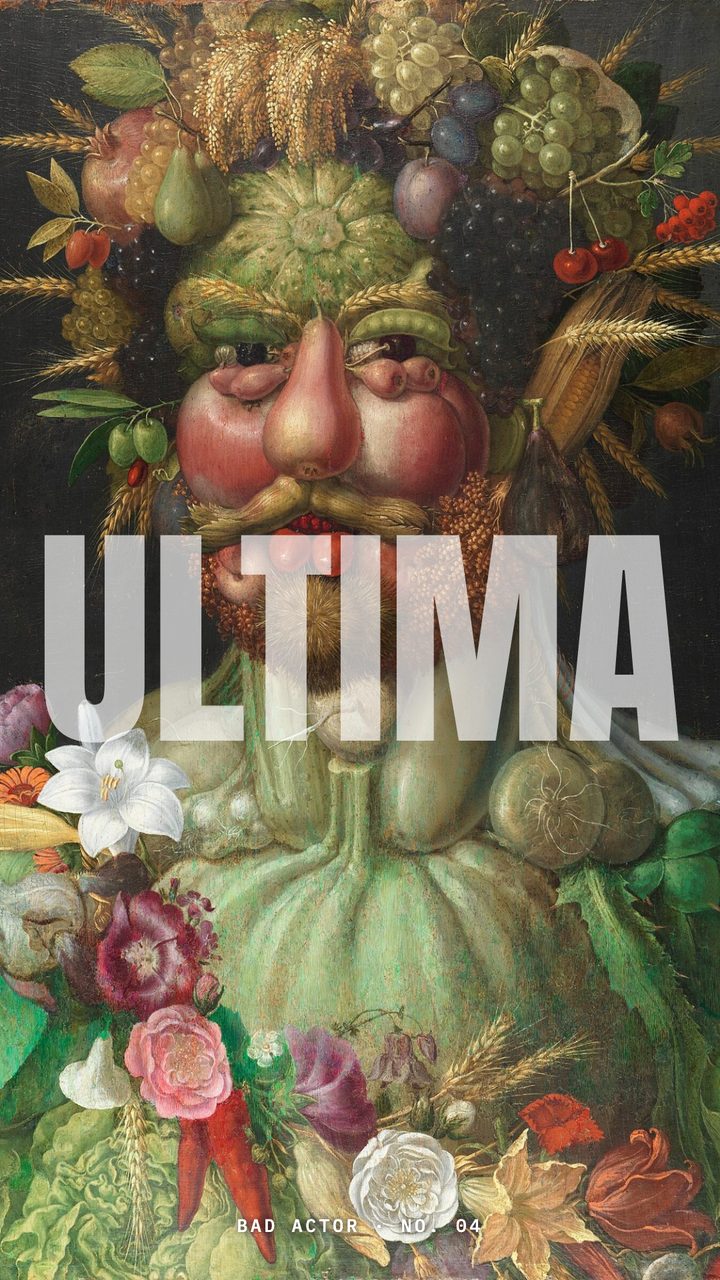
The painting: Giuseppe Arcimboldo, Vertumnus (1591), Skokloster Castle. Public domain.
Sources
- Raph Koster on coining "shard" for Ultima Online: the one-afternoon document, Mondain's gem, "multiverse" rejected, and his doubt about the database term
- Database sharding: the term likely from Ultima Online; an unrelated 1980s SHARD system held full replicas
- The Gem of Immortality, shattered by the Stranger in Ultima I; shards as alternate Sosarias; the Shadowlords
- Ultima Online, Origin Systems, Austin, released 1997
- Riddle, Slughorn, and the number seven; what a Horcrux is