

he invented pull to refresh, now he calls it addictive
Before the text arrived, the room knew. If you had a Nokia on the desk and a pair of cheap computer speakers next to it, the speakers would start to buzz, a hard digital stutter, a second or two before the screen lit up. GSM phones talk to the tower in timed bursts, 217 of them a second, and any nearby audio circuit picked the rhythm up and played it. People learned the sound the way you learn a doorbell. Your body sat up before the message landed.
Phones stopped doing that years ago. The pull-down gesture you are about to make the moment you finish reading this is, among other things, a replacement.
In 2009 Loren Brichter is 24 and building Tweetie, an iPhone app for reading Twitter. He is working on the second version and he has a layout problem. The bar across the top of the screen already holds a back button and a compose button, and there is no room for refresh. In Tweetie 1 he had stuck the refresh button at the top of the list of tweets, which meant scrolling all the way up to tap it. He later told a podcast the solution came from asking why refreshing could not simply be part of the scroll. Drag the list past the top, let go, and new tweets drop in.
Twitter bought Tweetie and hired Brichter in April 2010. He had filed a patent on the gesture the day before he agreed to sell, as he put it later, to have a bullet in the chamber. Twitter was granted it in 2013 and promised to use it only defensively. By then it did not matter who owned it. The gesture was in Mail, Facebook, Instagram, the Gmail app, every feed anyone made. A fix for a crowded toolbar had become the most repeated hand motion on earth.
It works like a lever. Most pulls bring nothing. Some bring a reply from the one person you were waiting on. B.F. Skinner and Charles Ferster spent the 1950s putting pigeons in boxes and feeding them on different schedules, and the pigeons that pecked hardest and longest were the ones fed on an unpredictable one. You can argue about how far a pigeon generalizes to a person. You can also watch anyone at a bus stop.
In 2017 the Guardian found Brichter at 32, with two kids, and he did not defend the thing. He said he never meant for the design to be addictive, and that pull-to-refresh, Twitter and smartphones were all addictive anyway. He said he regretted the downsides. He had blocked websites, turned off notifications, cut Telegram down to a handful of contacts, and started charging his phone in the kitchen overnight so it stayed out of the bedroom.
He also pointed out something true. Apps can refresh themselves now. Push notifications made the gesture redundant years ago, and he said it could easily retire. He compared it to the Door Close button in an elevator, which in most elevators does nothing and which people press anyway. The gesture never retired. People like pulling.
I wrote a draft essay in 2017 called Antisocial Media about the urge at dinner to dip into your pocket and refresh your screen, and your mind along with it. Eight years later it is still a draft and I still do it. In 2018 I asked whether anyone else got the phantom vibration in their pocket while they were already staring at the phone. In 2019 I joked that I was pushing Twitter on my friends like the drug dealer from a D.A.R.E. commercial. In 2024 I wrote a note called AIRPLANE MODE listing which apps to delete and which notifications to kill. Every couple of years I write the same note. The note is the pull.
What I think happened to the buzz is this. The phone used to announce itself. The speakers crackled, the pocket shook, the room told you something was coming and your attention went to meet it. That was the lever, and the tower was pulling it. Then phones got quiet. The announcement moved inside, to a place you could not hear, and the body that had learned the doorbell kept waiting for it.
remember when the speakers / used to buzz before you texted
There is no buzz anymore. So your thumb makes one. Drag down, let go, watch the spinner, feel the little catch in the chest while it decides whether anything is there. Most of the time nothing is. That is exactly the schedule the pigeons liked best.
Brichter solved a space problem. He had an inch of toolbar and no room for a button. The space he ended up taking was your evening, and he knows it, and his phone is in the kitchen, and yours is in your hand, and you are going to pull down the second this ends.
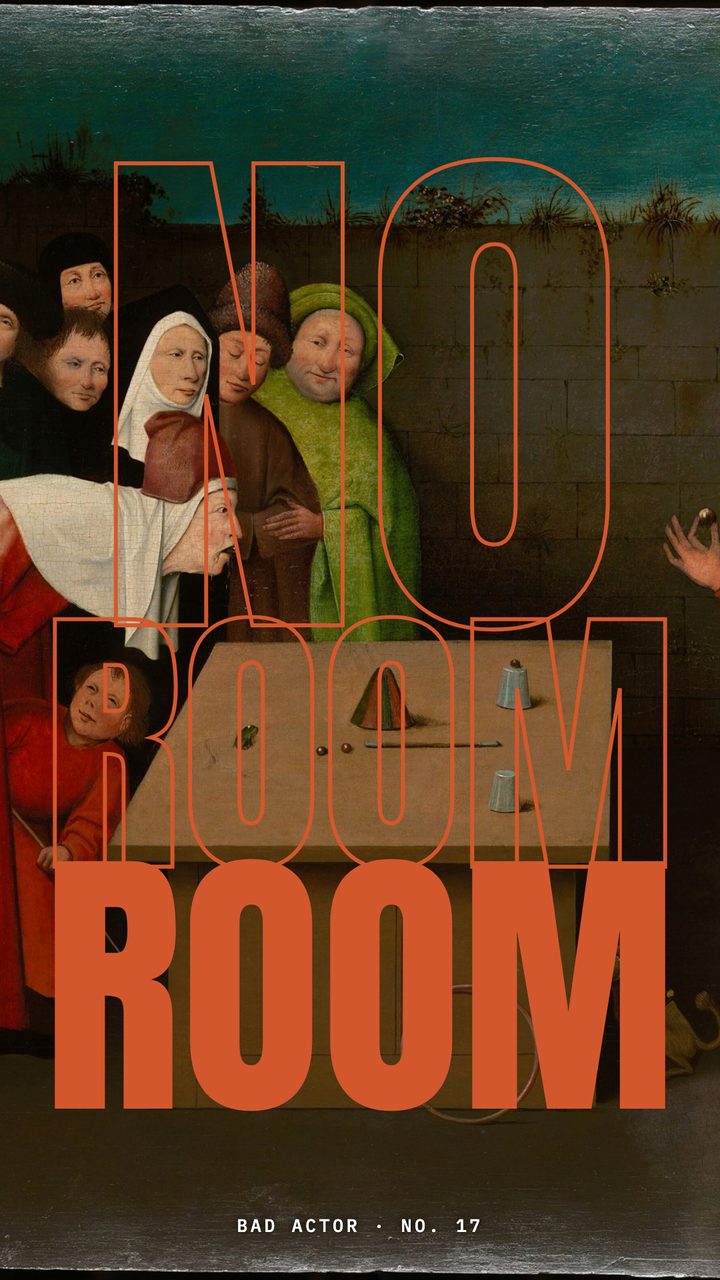
The painting: Follower of Hieronymus Bosch, The Conjurer (c. 1502), Musée municipal de Saint-Germain-en-Laye. Public domain.
Sources
- Brichter at 32: pull-to-refresh is addictive, phone charges in the kitchen, the gesture could retire
- The same Guardian passages, reprinted at Longreads
- Tweetie 1 had no room on the navbar; refresh became part of the scroll in Tweetie 2
- Twitter granted the pull-to-refresh patent in 2013, filed by Brichter the day before the sale, defensive use only
- Ferster and Skinner, Schedules of Reinforcement (1957)
- GSM bursts at 217 Hz coupling into speakers